
Edges & finishes
The fabrication decisions that make a worktop yours
Edge profiles, sink and hob cut-outs, drainer grooves, upstands, waterfall ends and corners. 45 options across 9 groups, explained properly rather than listed as a menu.
Before you choose
These are options, not products
You cannot add an edge profile to a basket, and we would not want you to. What each of these costs depends on how many metres of it your kitchen needs, and on the slab it is being cut from.
So there are no prices on this page. Every option below is itemised on your written quote instead, with the actual quantity your kitchen needs (six metres of upstand, one rebated hob cut-out, four softened corners), so you can see what each decision costs and take one out if you would rather spend the money on a better slab.
Most of these are decided at template stage, when we are standing in the kitchen and can see how the light falls and where you will actually be standing. If you are not sure yet, that is normal, and it is not a reason to delay getting a quote.
Jump to
9 groups
- Edge profiles11
- Sink cut-outs3
- Draining grooves7
- Hob cut-outs3
- Splashbacks & upstands2
- End panels & waterfalls2
- Corners6
- Extra cut-outs9
- Window cills2
Sinks and hobs must be on site before we template, and a Belfast sink must be installed and level. The stone is cut to the appliance that is actually there.
11 options
Edge profiles
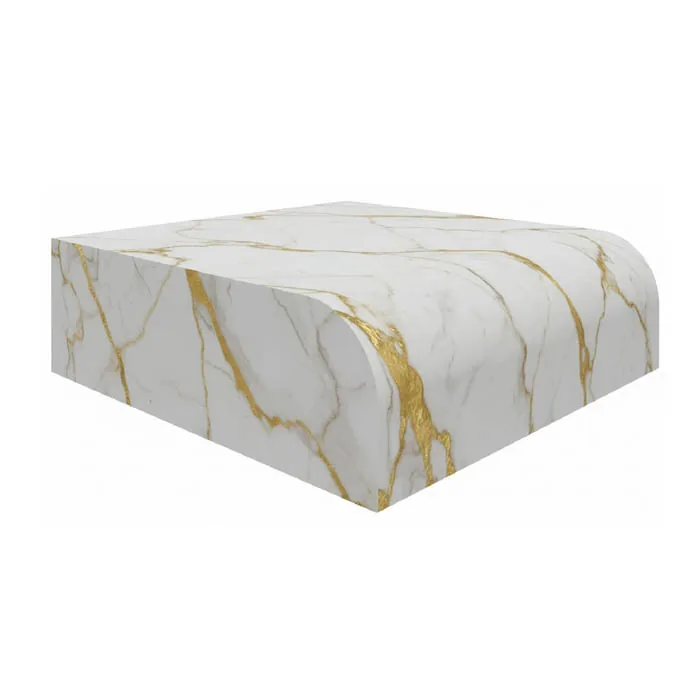
An edge profile is the shape machined onto the exposed sides of the slab. It does not change how the worktop performs. It changes how the room reads, and how the worktop feels under your forearm while you are standing at it.
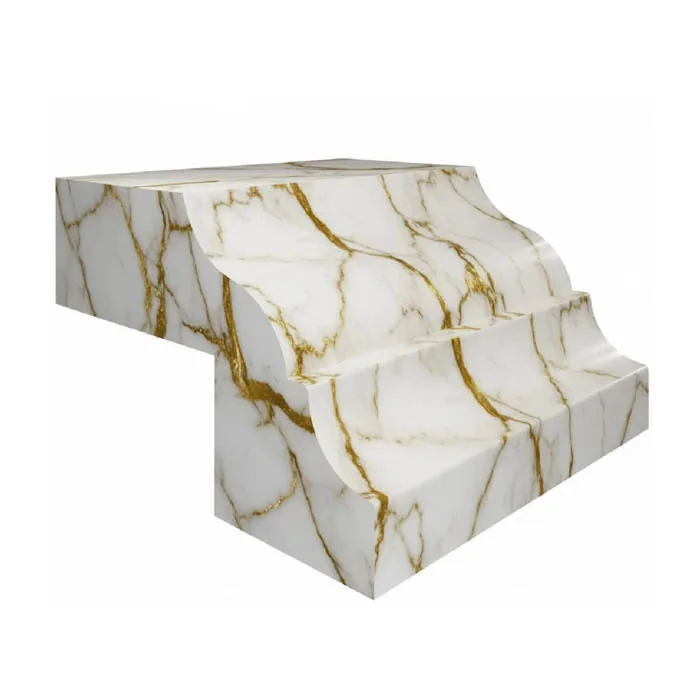
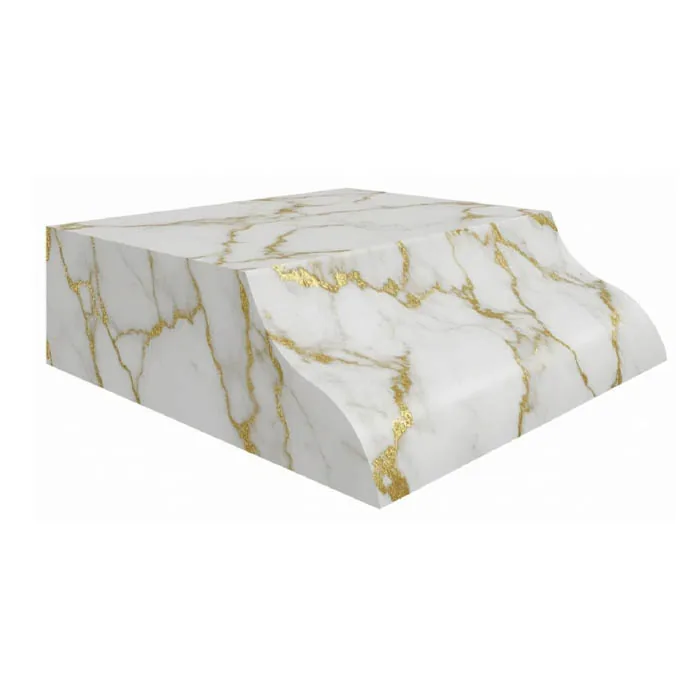
The reliable rule is to match the edge to the cabinetry, not to the stone. Flat slab doors and handleless runs want a square or lightly eased edge, because anything decorative fights the joinery. Shaker and in-frame kitchens carry a softened or bullnose edge comfortably. The heavily moulded profiles (ogee, double ogee, ogee with a scotia) belong in traditional kitchens with moulded door frames, and look out of place anywhere else.
Two practical notes. A crisp square arris chips more easily than a softened one, so if the kitchen takes a hammering, ease it slightly. And if you have young children, a rounded profile on an island corner is worth more than any amount of styling.
The one that costs more
When a mitred edge is worth paying for
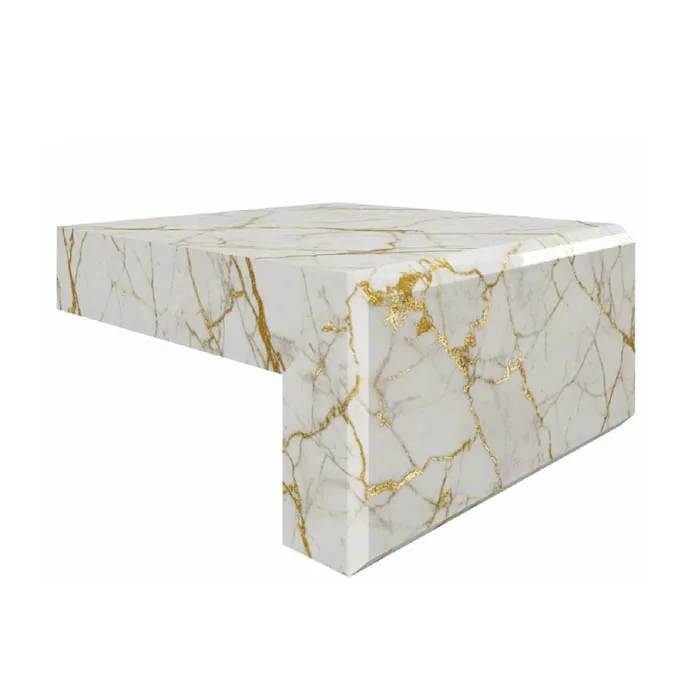
A mitred edge cuts the slab at 45 degrees and folds the material down, so a thinner slab reads as a deep, chunky worktop. There is no visible seam at the top edge, and on a patterned stone the veining carries round the corner instead of stopping dead.
It is more work (two accurate cuts, a bonded joint and a polish), so it costs more than a profile machined straight onto the slab edge. Whether that is money well spent depends entirely on the slab and the kitchen.
Worth it when
- You want a deep worktop profile without the weight and cost of a thick slab
- The stone has strong veining you want to see turn the corner
- It is an island, where the edge is visible from every side of the room
- The kitchen is contemporary and a moulded profile would look wrong
Probably not worth it when
- The stone is a plain single colour with nothing to carry round
- The run is mostly hidden behind appliances and tall units
- The budget is tight and the money would do more on a better slab
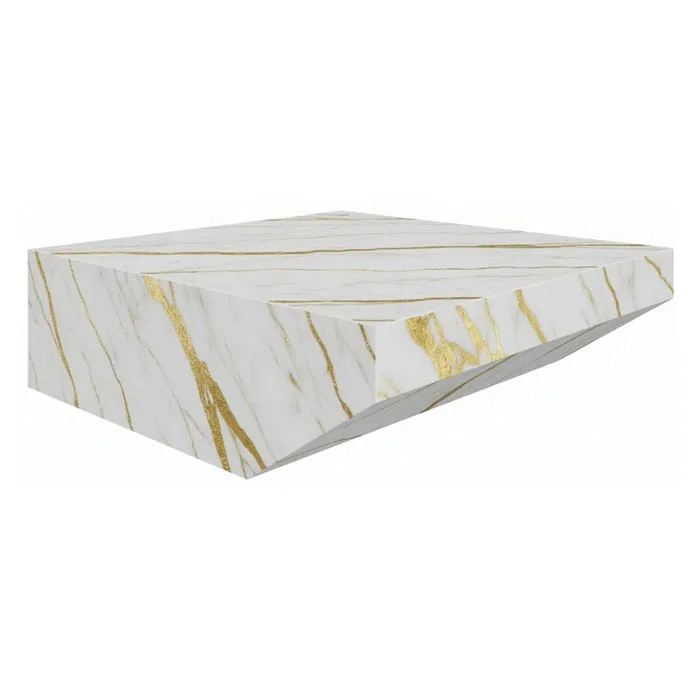
Concorde Edge
Quote option
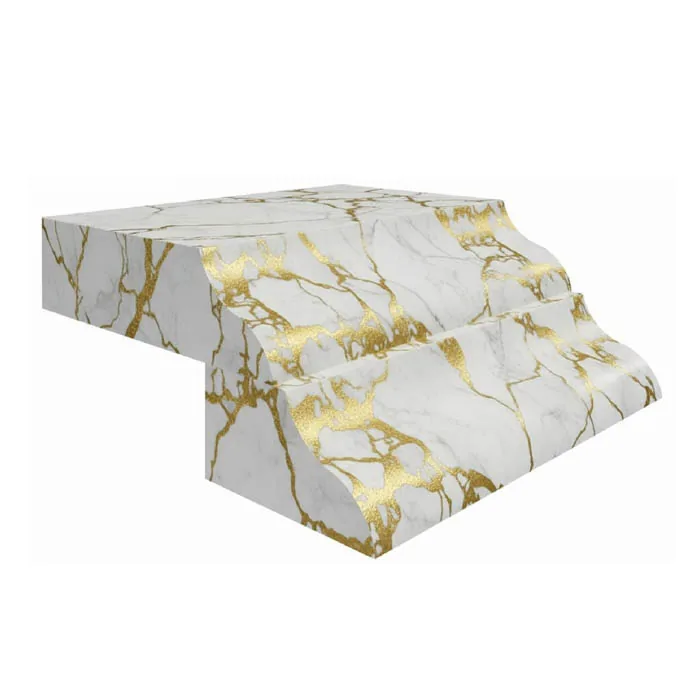
Double Ogee Edge
Quote option
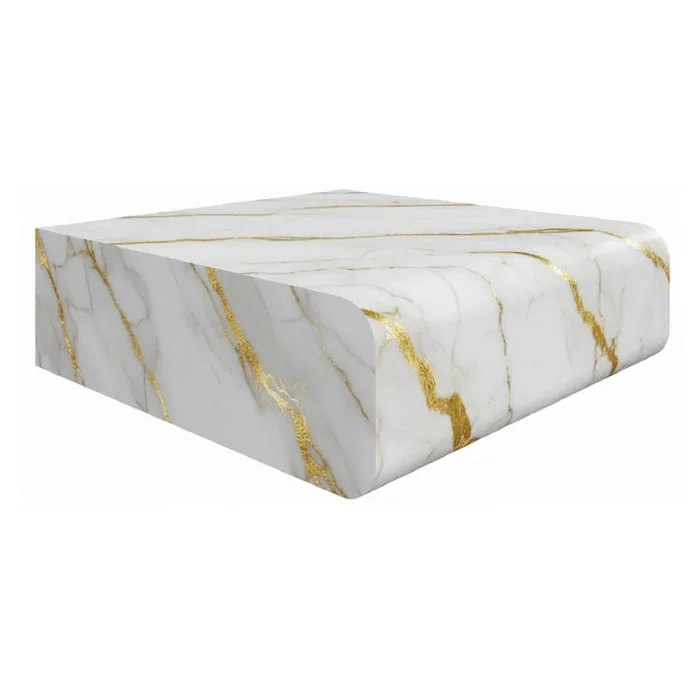
Double Pencil Edge
Quote option
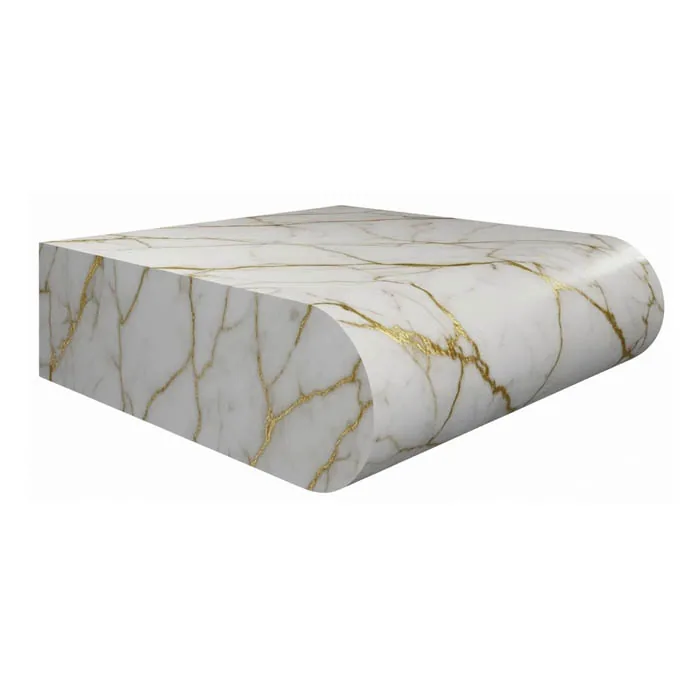
Full Bullnose Edge
Quote option
Half Bullnose Edge
Quote option
Mitred Edge
Quote option
Ogee + Scotia Edge
Quote option
Ogee Edge
Quote option
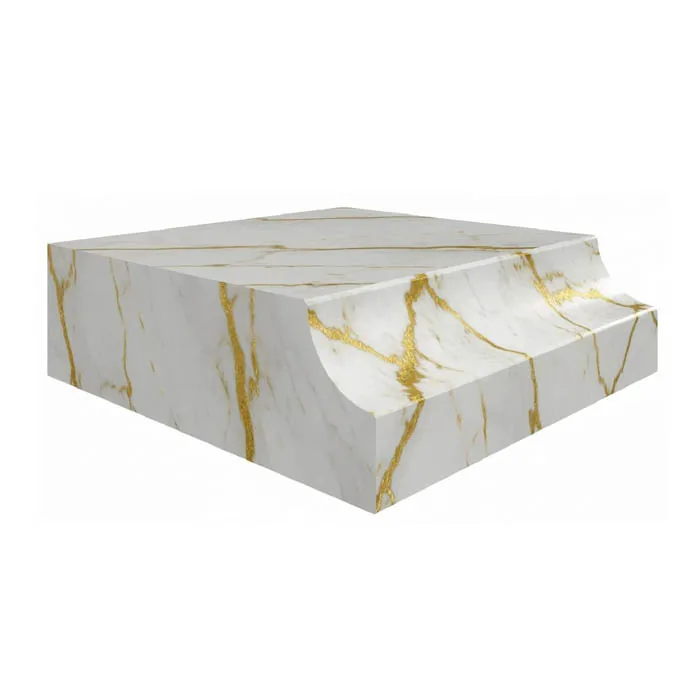
Scotia Edge
Quote option
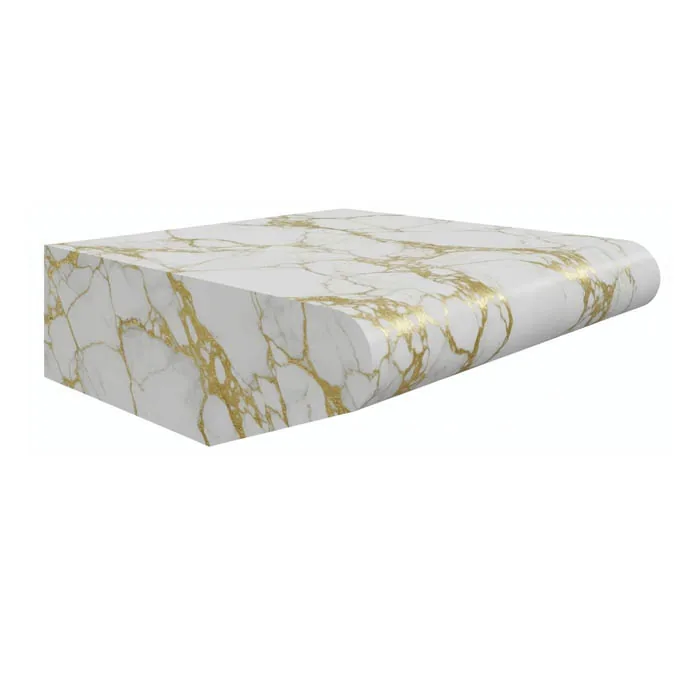
Sharks Nose Edge
Quote option
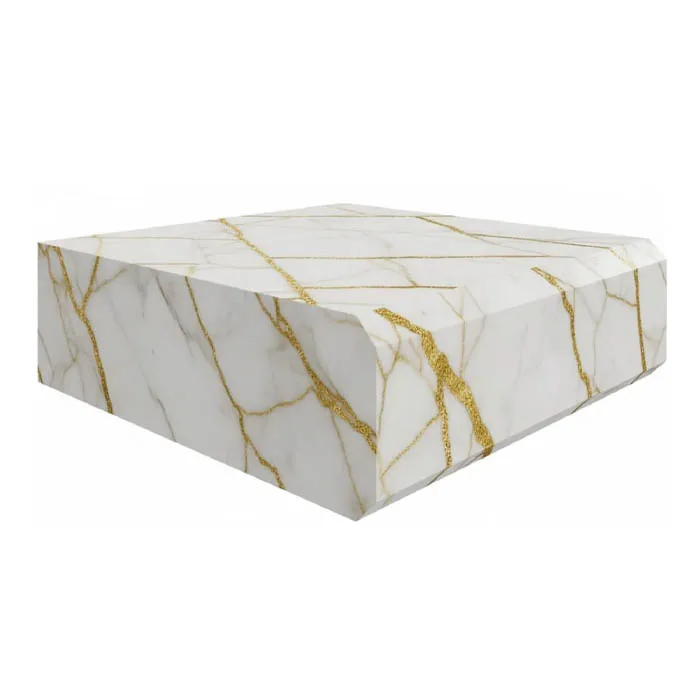
Standard Edge
Quote option
3 options
Sink cut-outs
A sink cut-out is machined in the workshop from your template, not on site. That is why we need the actual sink, or its exact template drawing, before fabrication starts, and why a sink swapped late is one of the few things that genuinely delays a kitchen.
Corners are radiused rather than cut square. A sharp internal corner is a stress point, and stress points in stone eventually become cracks. If anyone offers you a square-cornered cut-out in quartz or sintered stone, walk away.
Scroll the table sideways to compare
| Sink type | How it works | What it does well | What it asks of you |
|---|---|---|---|
| Undermount | Sink bonded under the stone. The cut-out edge is polished, because you can see and feel it. | Crumbs sweep straight in. Nothing to catch dirt at the rim. The neatest option by a distance. | More fabrication, and the polished aperture edge has to be right because it is on show. |
| Inset | Sink drops into the aperture and its rim sits on top of the stone. | Forgiving, cheaper, and works with almost any sink you can buy. | The rim collects residue and the silicone line around it needs cleaning and eventually renewing. |
| Belfast / butler | A deep ceramic sink stands in its own base unit and the stone is cut and polished around it. | The look, in a traditional or country kitchen, and a very large bowl. | The sink and its base unit must be installed and level before we can template. No exceptions: the stone is cut to the sink that is there. |
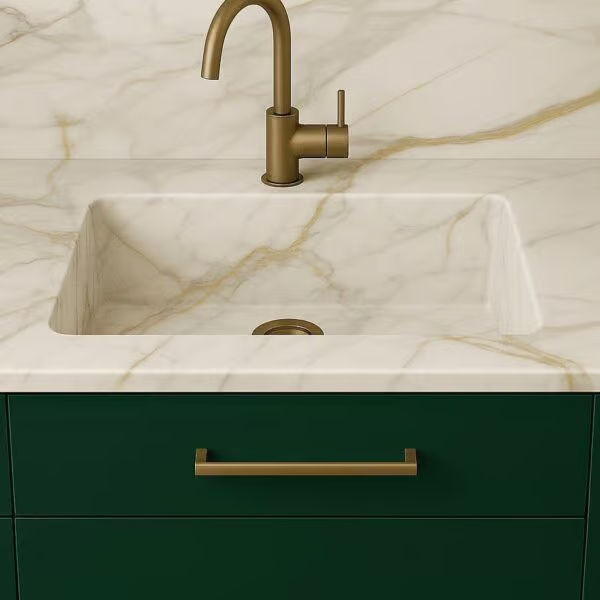
AXIX Sink Cut Out
Quote option
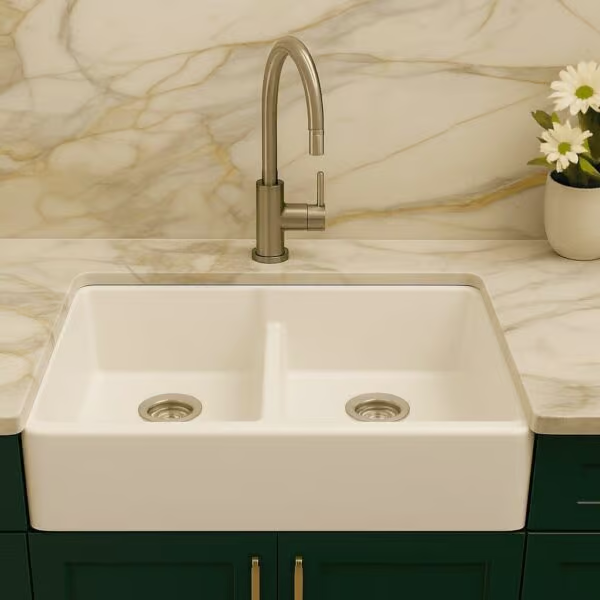
Belfast Sink Cut Out
Quote option
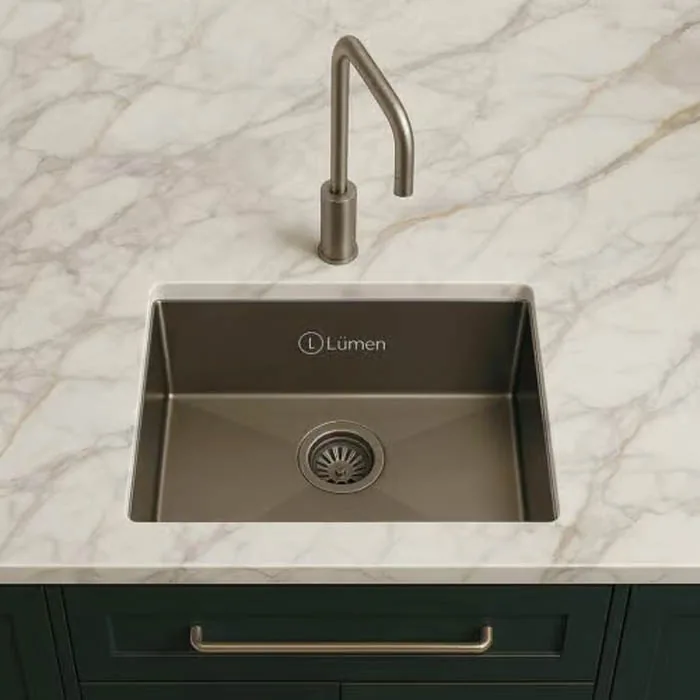
Standard Sink Cut Out
Quote option
7 options
Draining grooves
Grooves are milled into the surface beside the sink and fall towards it, so water runs back rather than sitting. They only work if they are cut with the right fall, which is set at fabrication. A groove without fall is a puddle with a pattern.
What they are genuinely good at: draining a colander, a chopping board or a couple of pans without a plastic rack cluttering the worktop. What they are not: a hidden feature. Grooves are always visible, they catch a little residue in hard-water areas, and they need a wipe along their length rather than a swipe across. A flat recessed drainer is the subtler option, and easier to keep clean, but it drains more slowly.
If your water is hard, expect limescale to show in the grooves before it shows anywhere else. That is not a fabrication fault, it is chemistry, and a periodic descale sorts it.
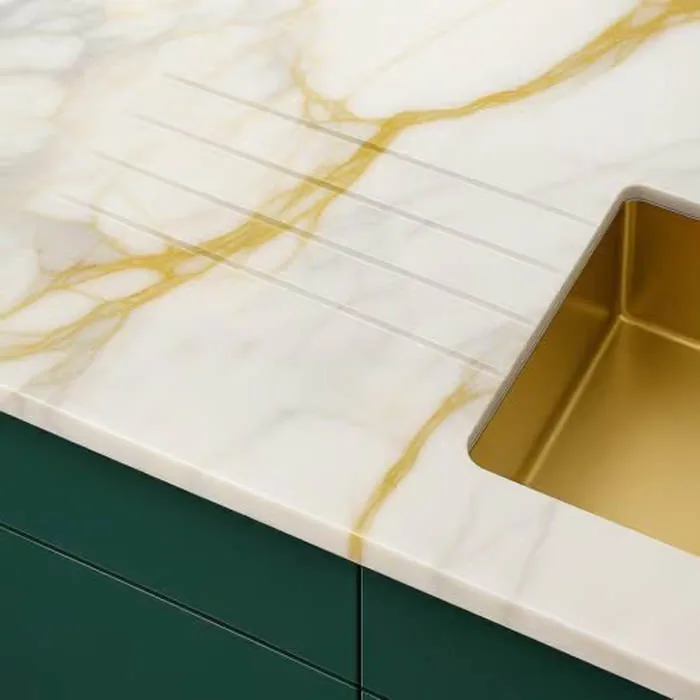
4 Straight Grooves
Quote option
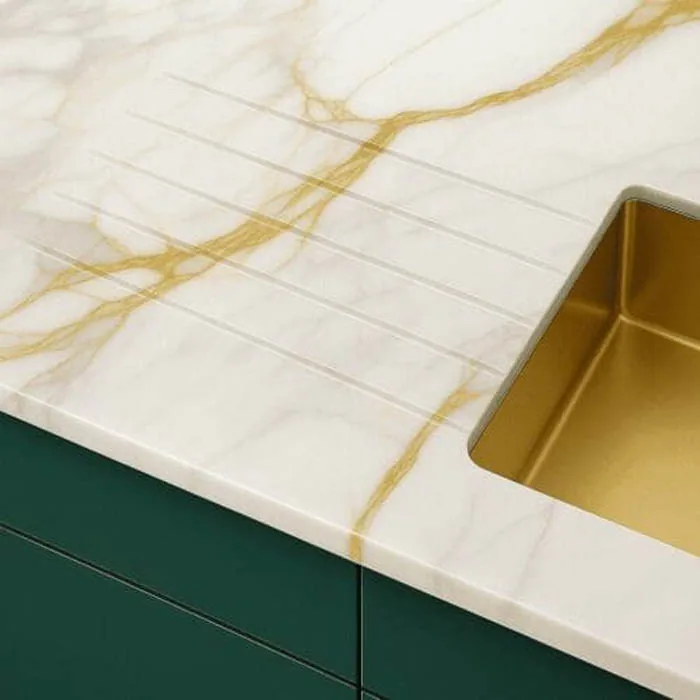
5 Straight Grooves
Quote option
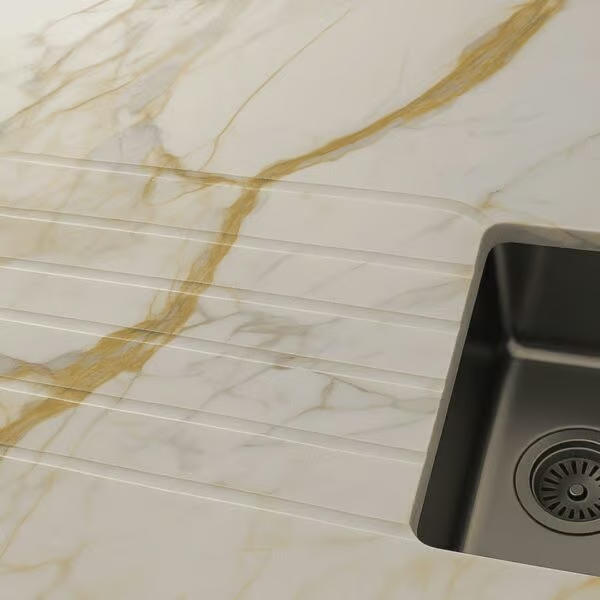
Angled Grooves
Quote option
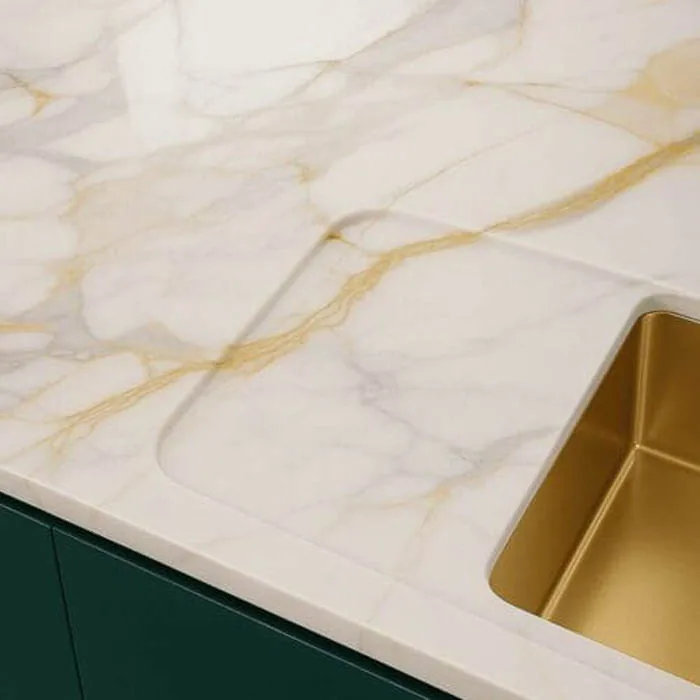
Half Recess Flat
Quote option
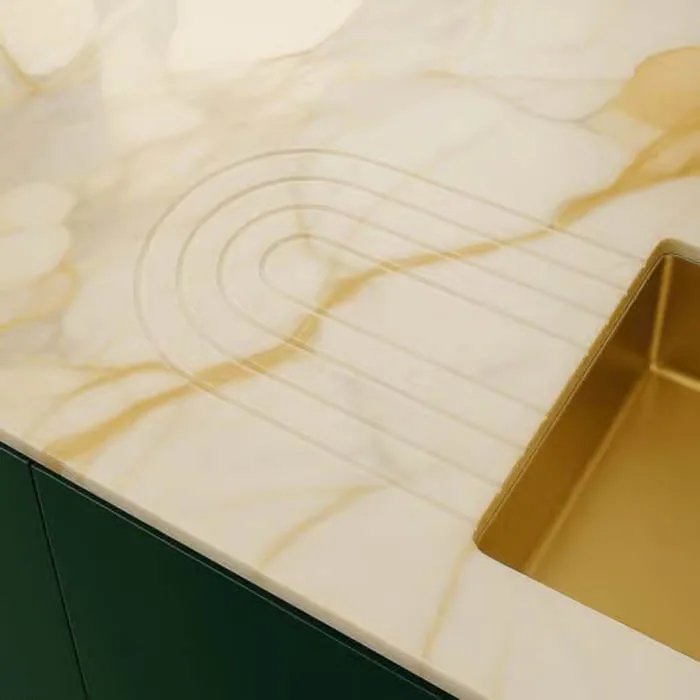
Horseshoe Grooves
Quote option
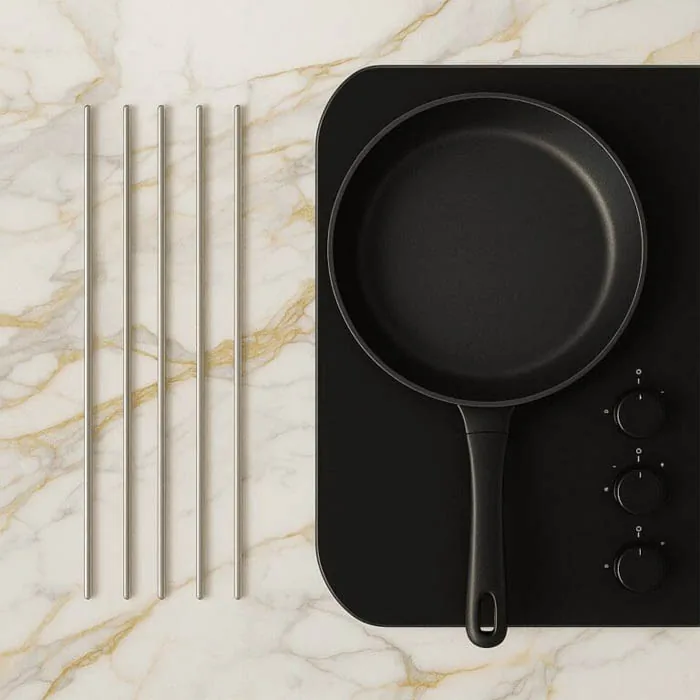
Pan Bar Grooves
Quote option
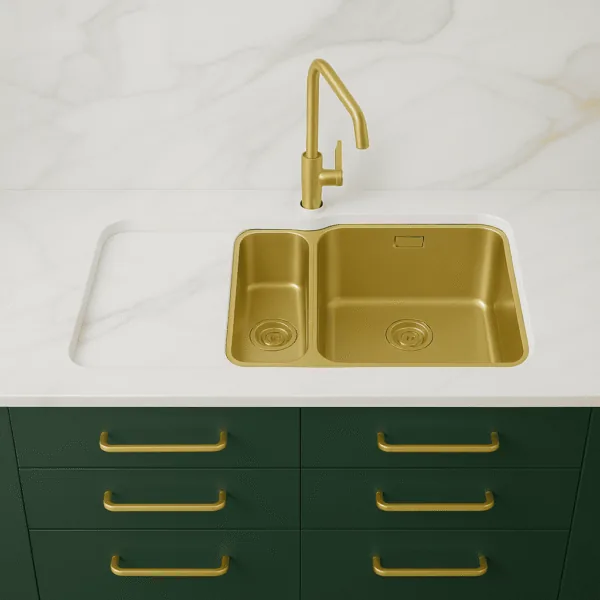
Sink Recess Full Flat
Quote option
3 options
Hob cut-outs
A standard cut-out is an aperture the hob drops into, sitting slightly proud of the stone. It is the most forgiving option, it suits almost every hob on the market, and it is what most kitchens have.
A rebated cut-out machines a recess around the aperture so the hob sits flush with the worktop surface. It looks considerably better and wipes down in one pass. It also demands more of the fabrication and of the appliance. Not every hob is designed to be installed flush, and the manufacturer decides that, not us. Send the hob model with your enquiry and we will tell you what is possible before you have committed to anything.
Either way the appliance has to be on site before we template. A hob specification taken from a website is not a template, and a hob that arrives 4mm different from its brochure is a ruined slab.
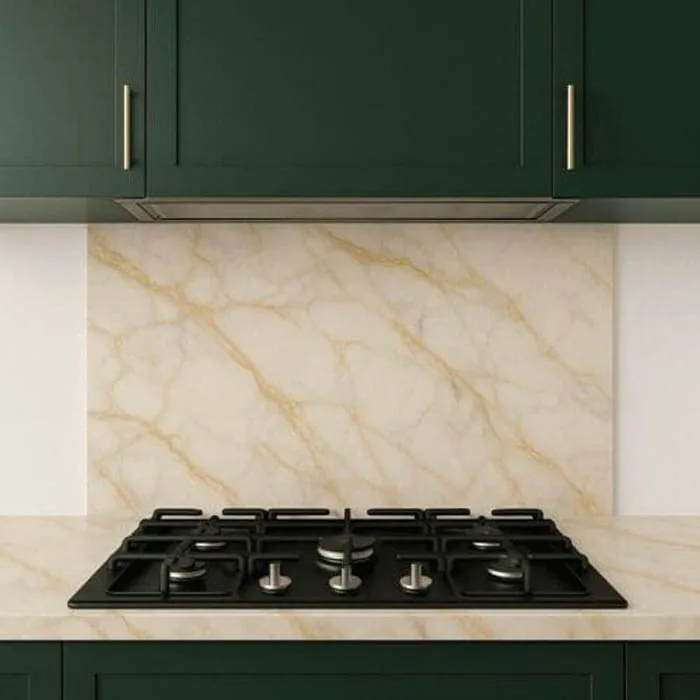
Hob Splashback
Quote option
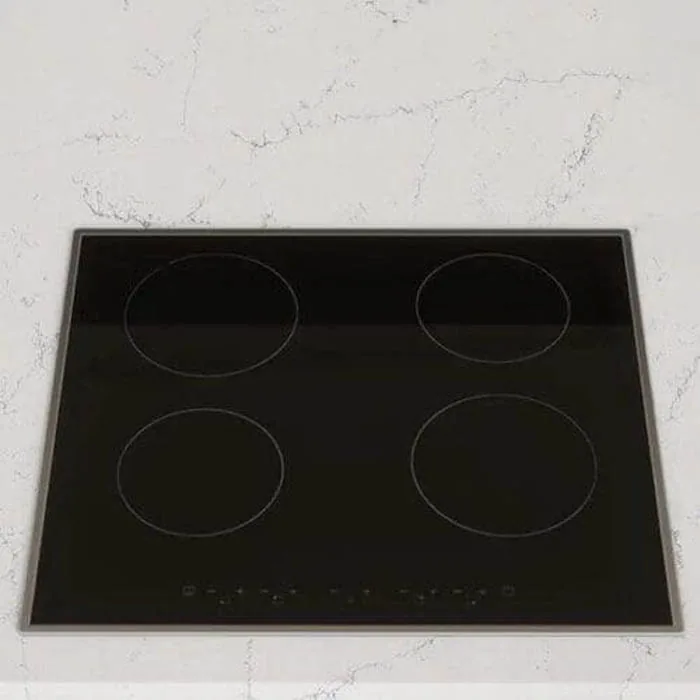
Rebated Hob Cut Out
Quote option
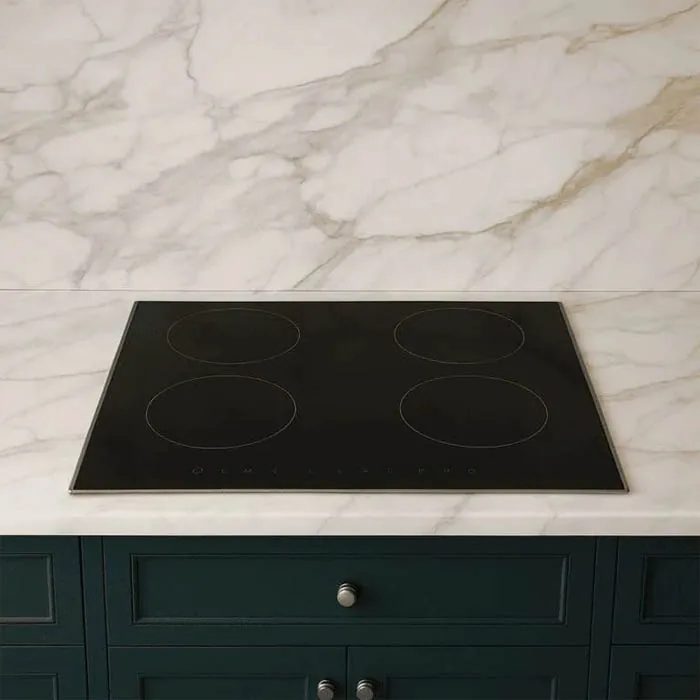
Standard Hob Cut Out
Quote option
2 options
Splashbacks & upstands
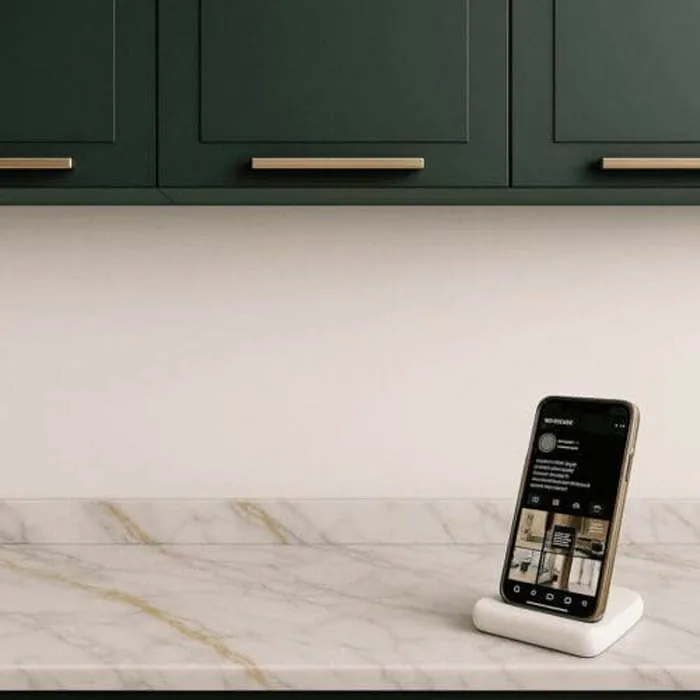
An upstand is a slim band of the same material running along the back of the worktop where it meets the wall. It kills the silicone line, hides the fact that no wall is ever flat, and is the cheapest way to make a worktop look considered rather than fitted.
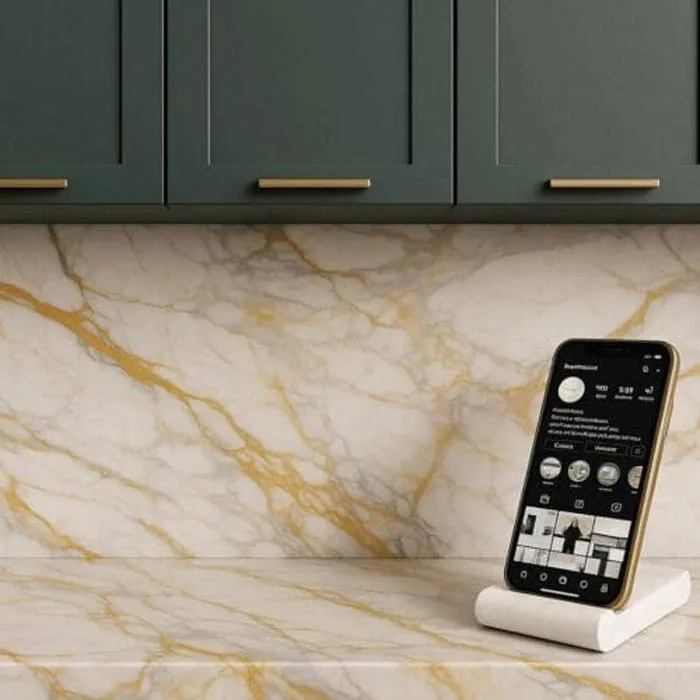
A splashback or full wall cladding takes the same stone up the wall, usually behind the hob or across a whole run. It costs more because it is more material and more cutting, and it is worth it when the stone is the feature. A strong veined slab running from the worktop up to the extractor is a completely different room to one with tiles.
The detail that actually matters is the batch. Stone ordered later, even in the same colour, can read warmer or cooler than the worktop it is meant to match, and once it is on the wall you will see it under every downlight. We cut upstands and splashbacks from the same batch as the worktop for exactly this reason.
Choose an upstand when
- The walls are uneven and you want the junction dealt with cleanly
- You are tiling above and just want the joint handled in stone
- The budget is better spent on the worktop itself
Choose a splashback when
- The slab has movement you want to see at eye level, not just at worktop height
- It is behind a hob, where a single wipeable surface beats grout
- You want no visible joint between worktop and wall in the busiest zone
Upstand
Quote option
Wall Cladding
Quote option
2 options
End panels & waterfalls
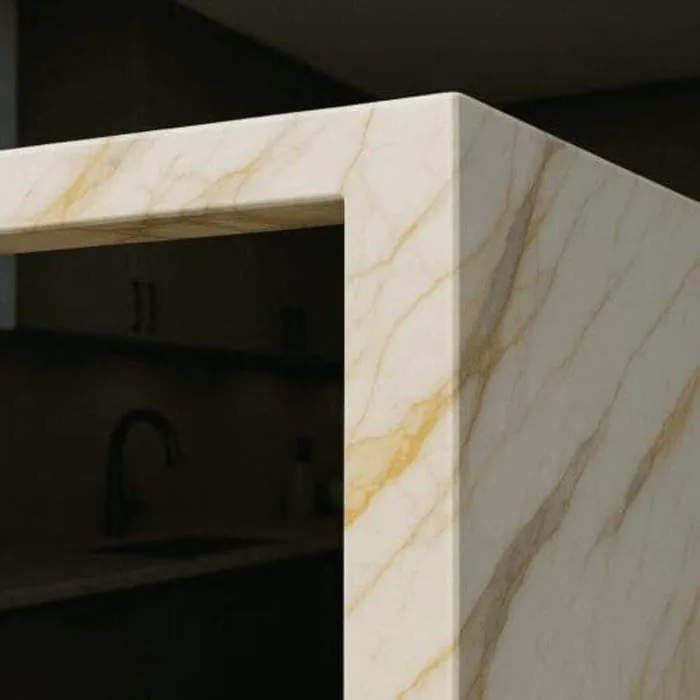
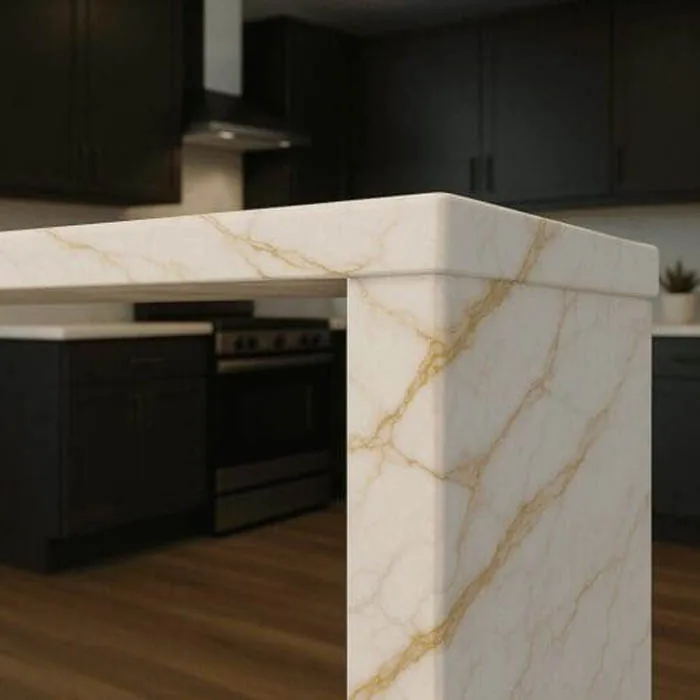
A waterfall end runs the material vertically down the end of an island or a run of units. It is the single most effective way to make an island look like a piece of furniture rather than a row of cupboards, and on a strongly patterned slab it is where the material earns its money.
The mitred version joins the horizontal and vertical pieces at 45 degrees so there is no visible edge at the corner and, if the fabrication is done properly, the veining continues down the side without interruption. The set-back version butts the vertical panel underneath the worktop, which is simpler, cheaper, and leaves a visible line.
If the slab has strong movement, take the mitre. If it is a plain colour, the set-back detail is honest value and almost nobody will notice.
Waterfall Mitred
Quote option
Waterfall Set Back
Quote option
6 options
Corners
External corners, the ones that stick out into the room, are the ones to think about. A square corner is the sharpest look and the most vulnerable: it chips if a pan swings into it and it hurts if you walk into it. Softening or rounding it costs almost nothing and removes both problems.
The size of the radius is a design decision. A small radius reads as a square corner that has simply been made safe. A large radius is a deliberate curve and changes how a peninsula feels to walk around, genuinely useful in a tight galley where you are squeezing past.
Internal corners, where two runs meet, are radiused as standard for the same reason we radius sink cut-outs: a sharp internal angle in stone is a stress point.
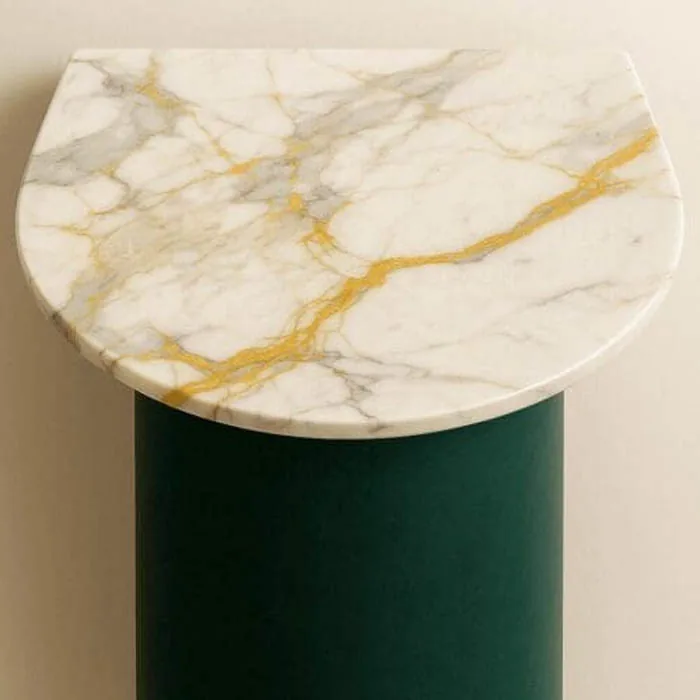
Double Round Corner
Quote option
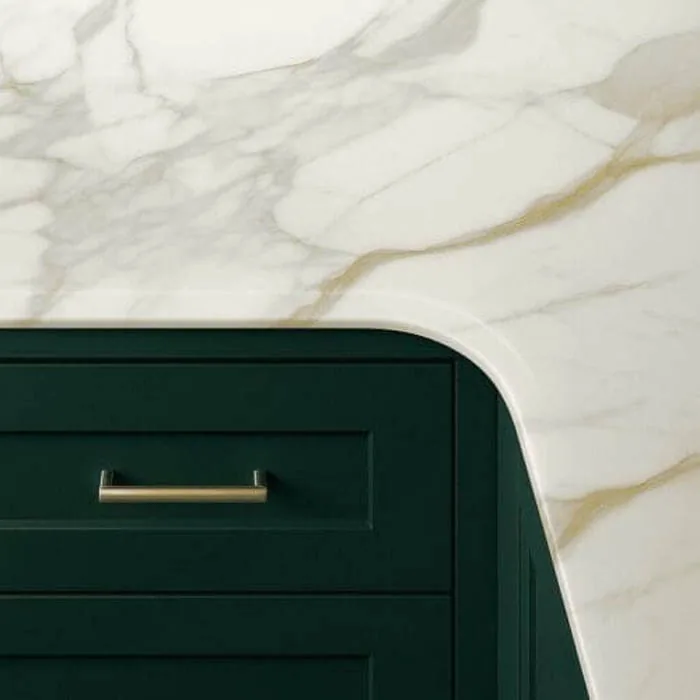
Internal Corner
Quote option
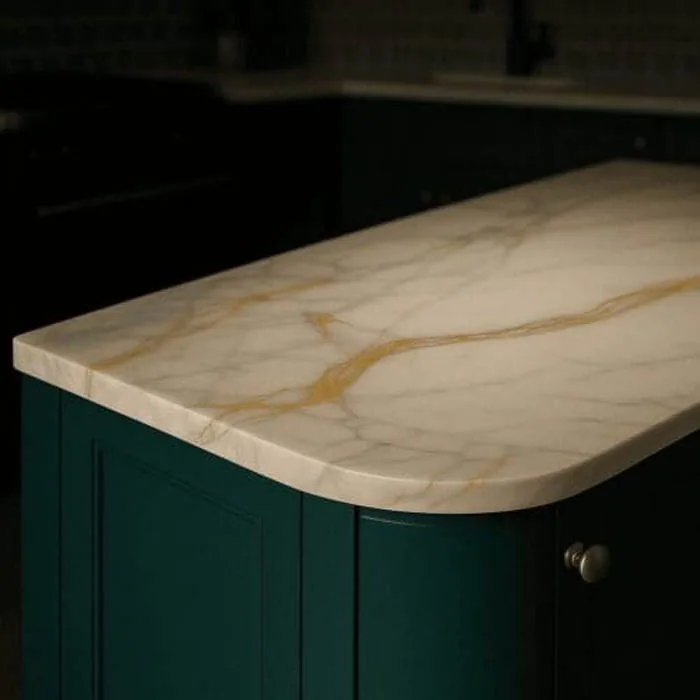
Large Corner
Quote option
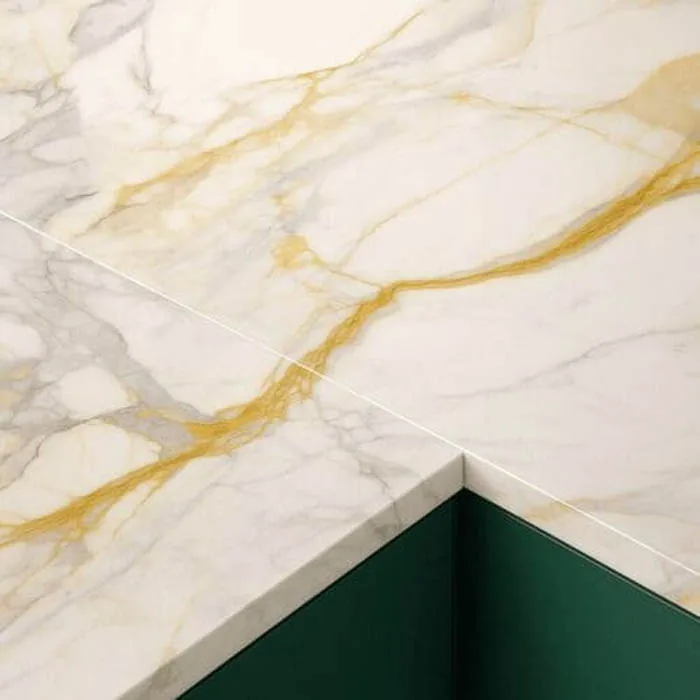
Normal Corner
Quote option
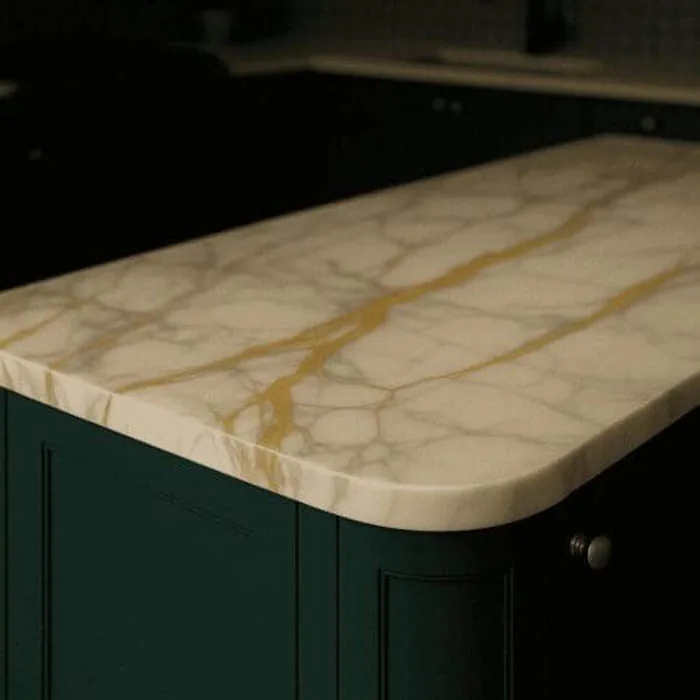
Small Corner
Quote option
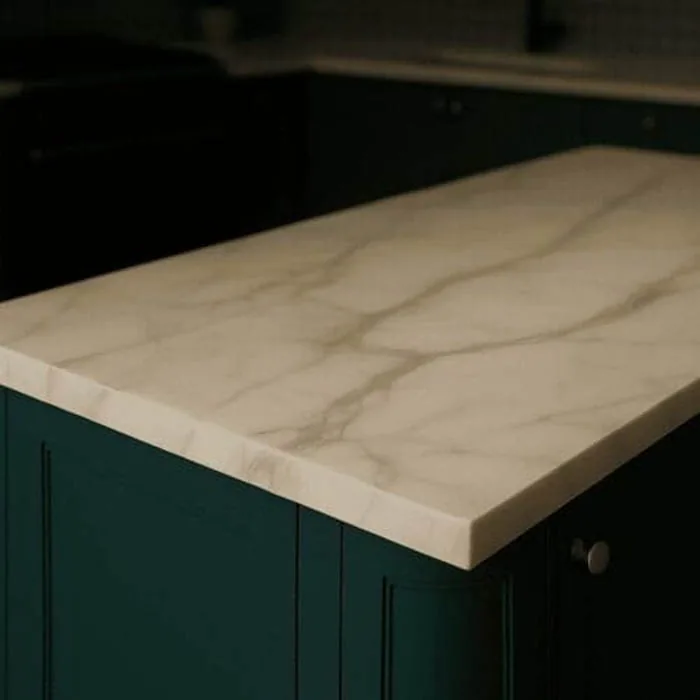
Softened Corner
Quote option
9 options
Extra cut-outs
This is the group that most quotes hide inside a single line, and it is exactly where a cheap quote becomes an expensive one. Every hole, notch and shaped edge is time on a machine and a chance to ruin a slab, so we itemise each one and you can see what dropping a socket or adding a breakfast bar actually costs before you decide.
Two things worth knowing. A breakfast bar overhang beyond a certain point needs support (brackets or a leg), and no amount of stone thickness changes that; the failure mode is the cantilever, not the material. And breakfronts, where the worktop steps forward past the cabinet line, need the underside finished properly because people see it from a sitting position.
Sockets and pop-ups have to be agreed before templating, because the cut-out position depends on where the electrician has run the cable, not on where it would look best.
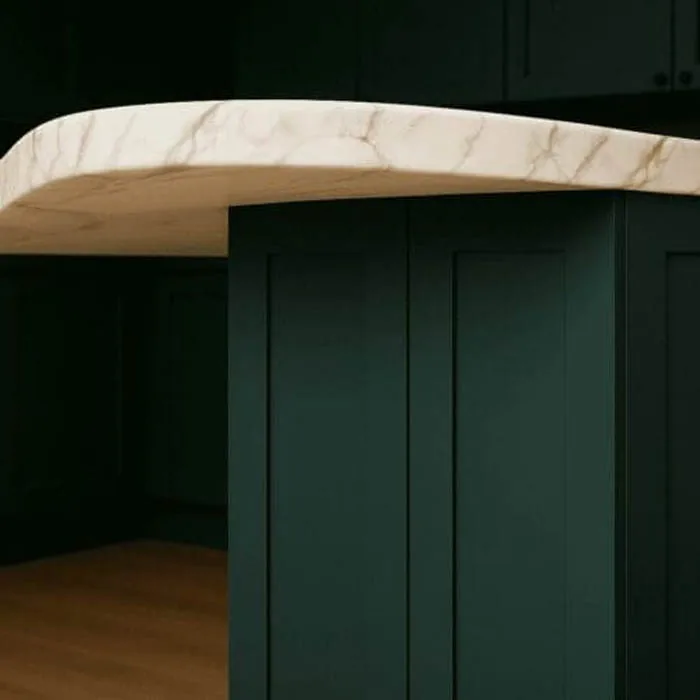
Breakfast Bar
Quote option
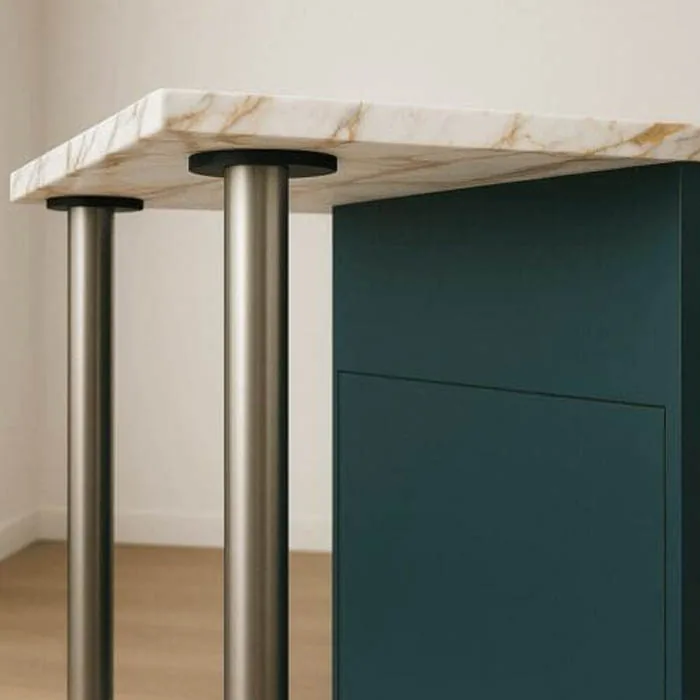
Breakfast Bar Support
Quote option
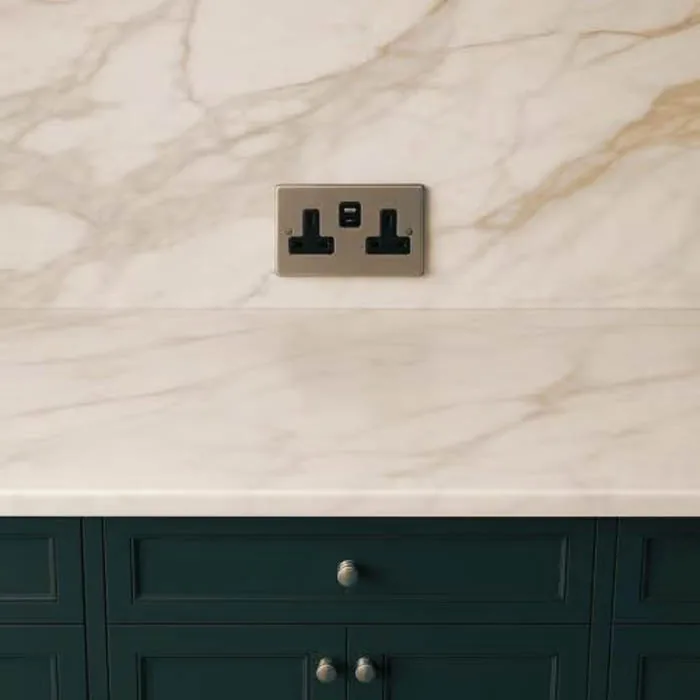
Electrical Socket
Quote option
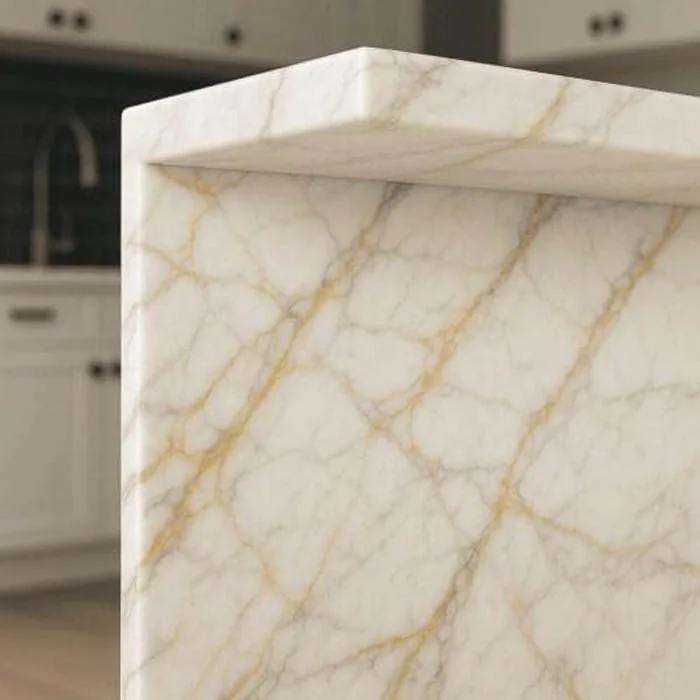
Floating Shelves
Quote option
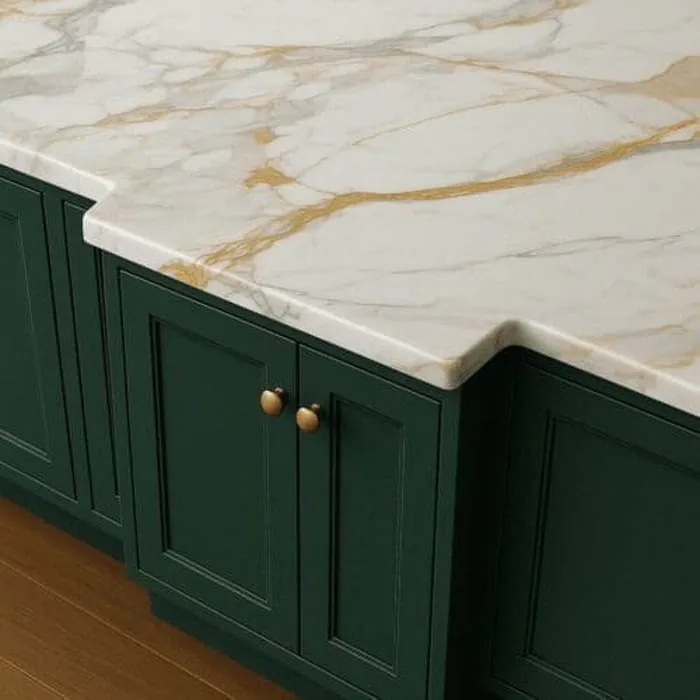
Full Breakfront
Quote option
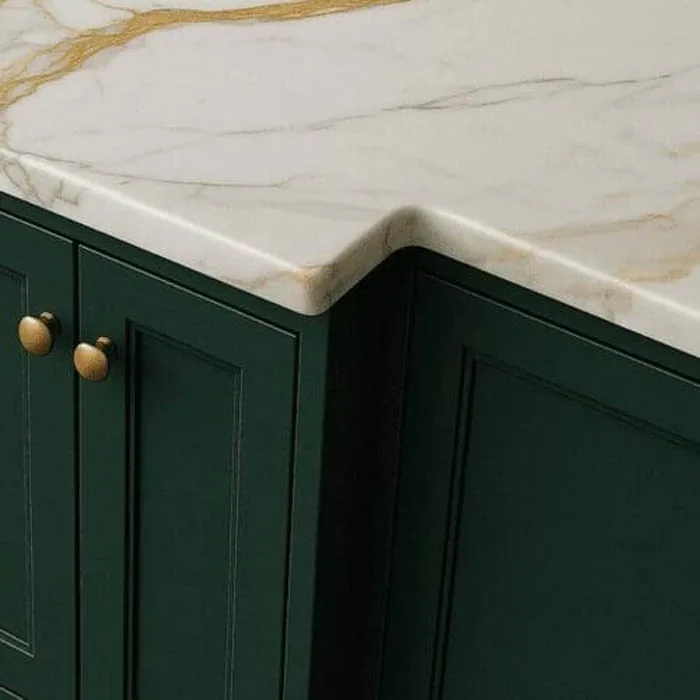
Half Breakfront
Quote option
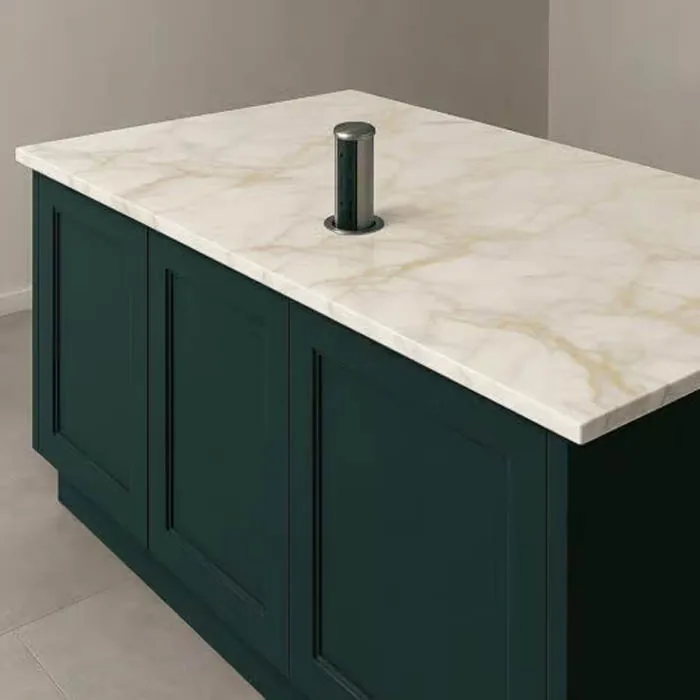
Pop-up socket
Quote option
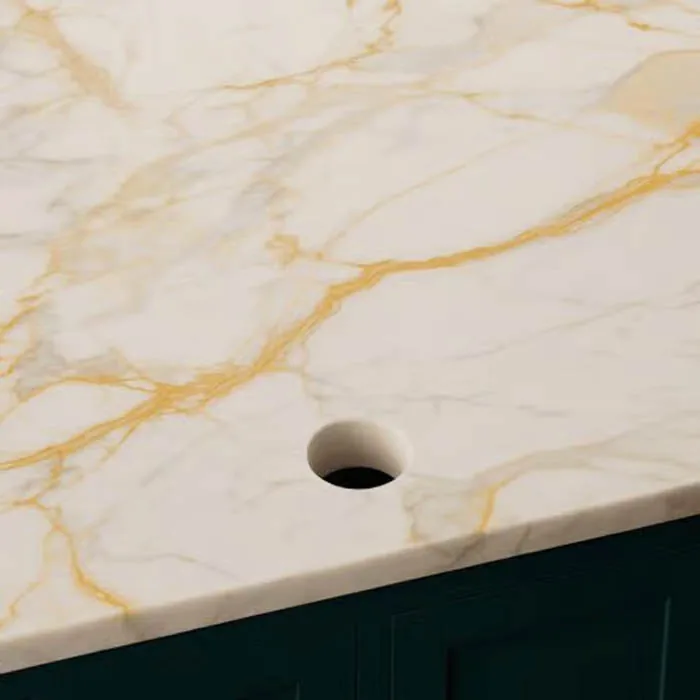
Tap Hole
Quote option
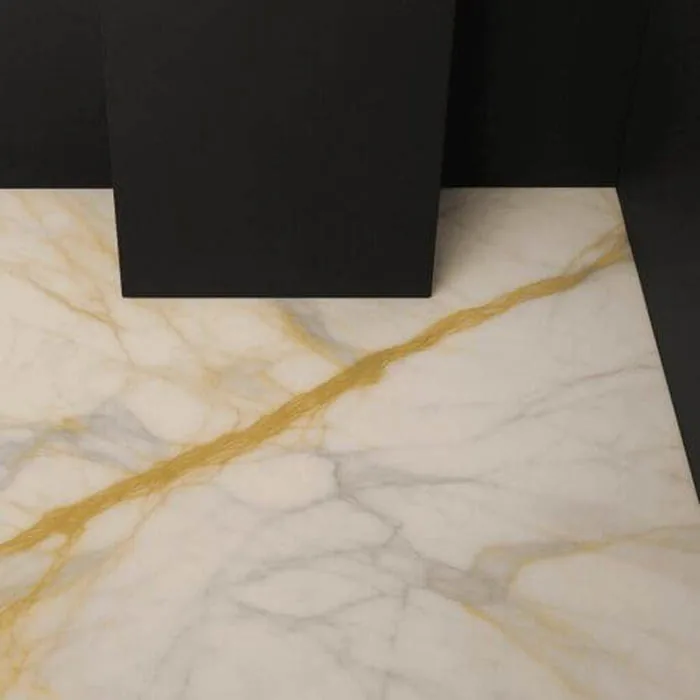
Triple Notch
Quote option
2 options
Window cills
A stone cill in the same material as the worktop is a small detail that pulls a kitchen together, particularly where a run of units passes under a window. It is also far more practical than timber for a cill that gets wet from a sink beneath it or condensation above it.
The notched version is scribed into the reveal so it sits inside the opening rather than butting up to it, which is the tidier detail on a deep reveal or an older house where nothing is square.
Order it with the worktop rather than later. Same batch, same day on site, no colour argument.
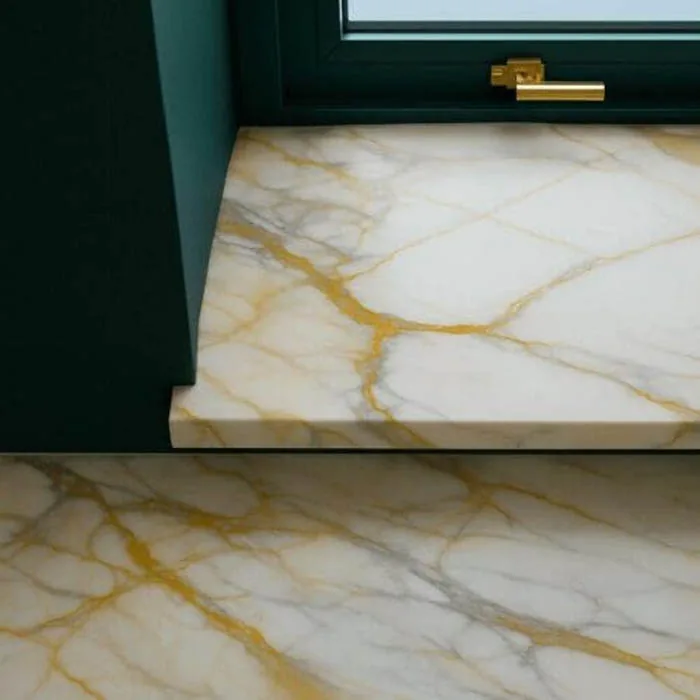
Notched Window Cill
Quote option
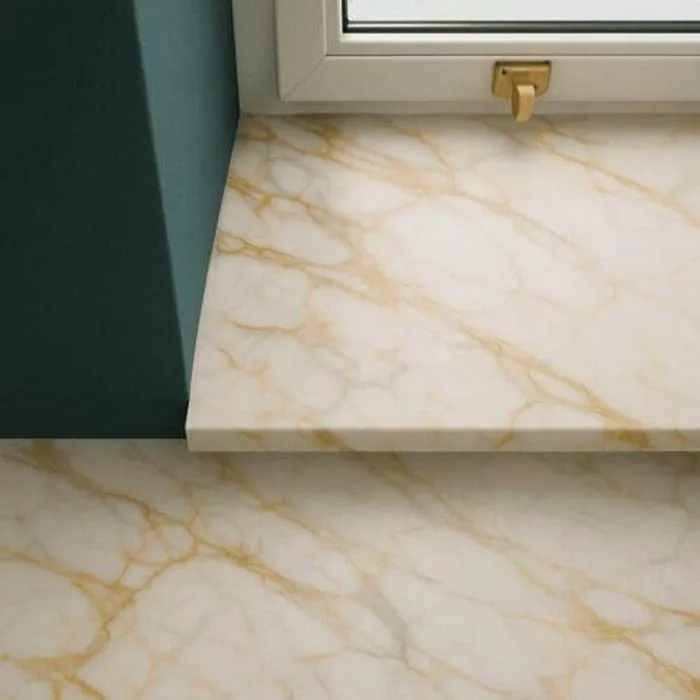
Standard Window Cill
Quote option
Next step
Tell us the kitchen and we will itemise every one of these
Edges, cut-outs, upstands and corners all listed separately with quantities, so you can see what each choice adds before you agree to it. Fitted 3–7 working days from template.
Not sure which edge or cut-out you want? You do not need to be. We go through it at template stage, in the kitchen, with the slab chosen.